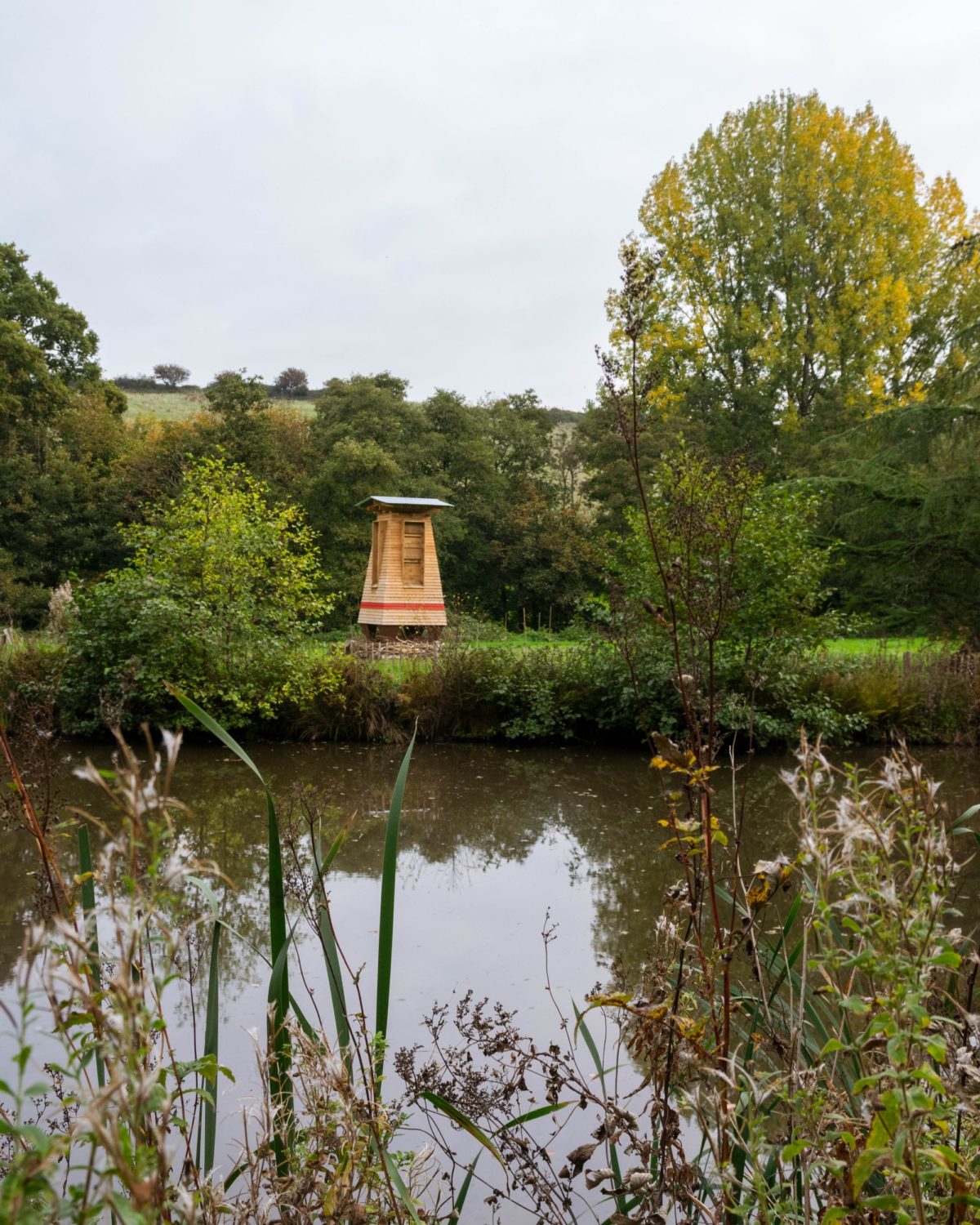
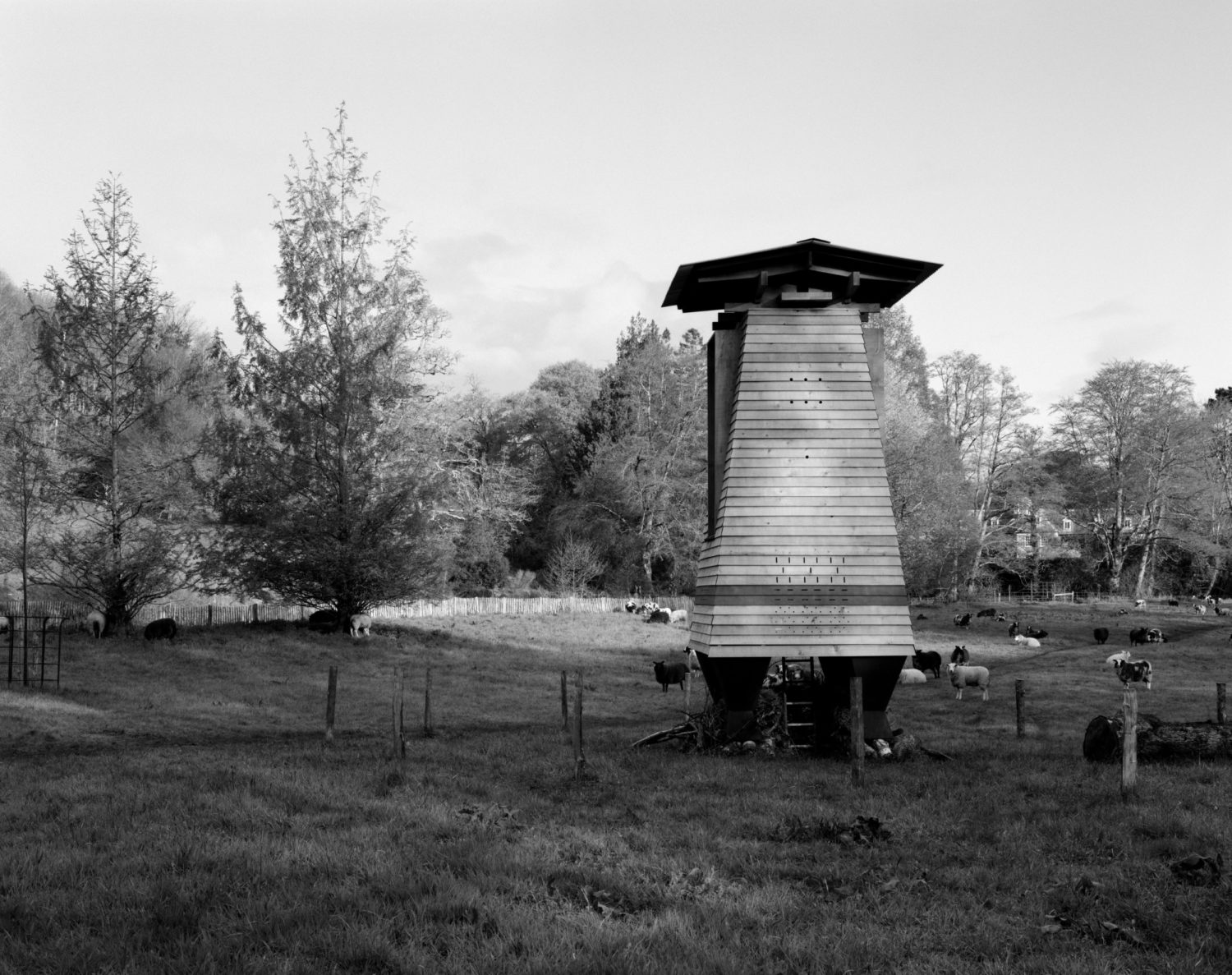
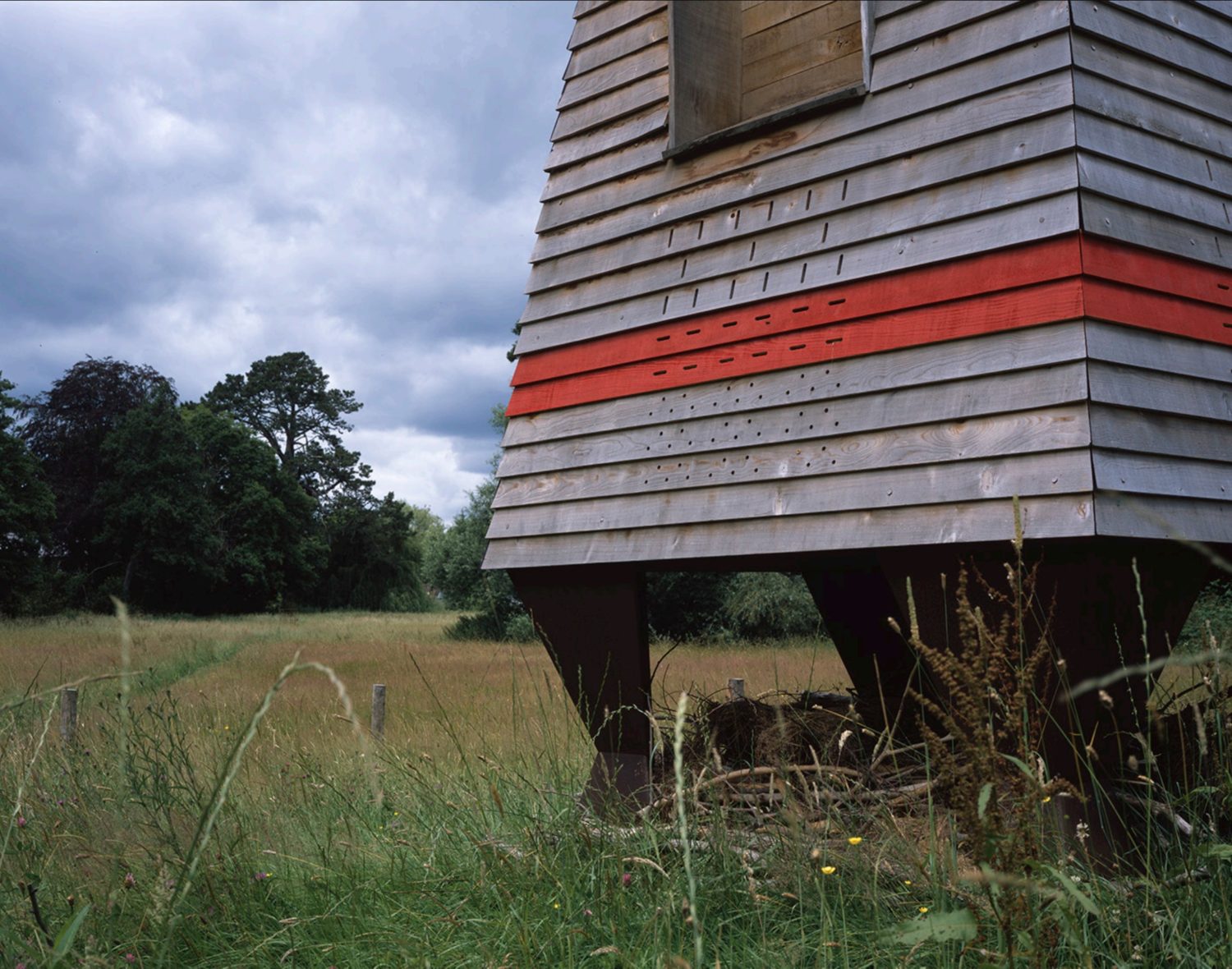
Hrōst is the Old English word for the wooden framework of a roof and origin of “roost”. Hrōst is a prototype, informed by detailed research, wide ranging dialogues and published standards.
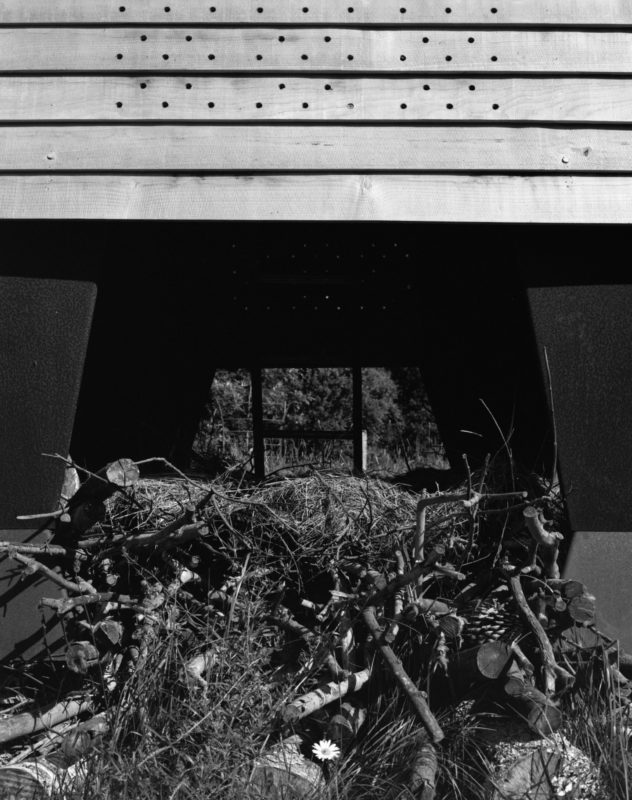
Hrōst offers adaptable site specific proxies for local wildlife. Some species will live together communally, others territorially. Some require the creation of unique conditions and are very particular, others less so.
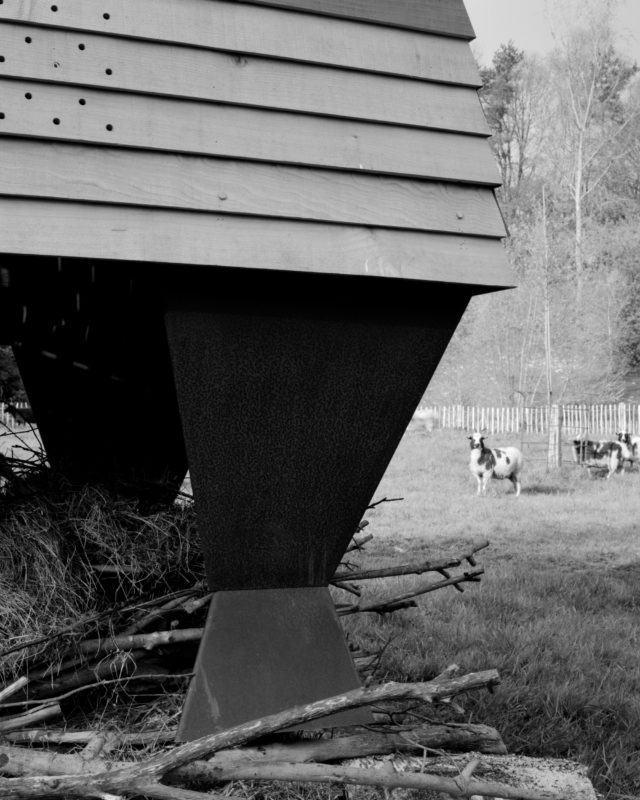
Alongside wider habitat restoration, new hedgerows, trees and water, the homegrown timber eaves, crawl spaces, cavities, gaps and hollows offer invitations to nest, roost, perch and shelter – a proxy barn, an architecture for other species.
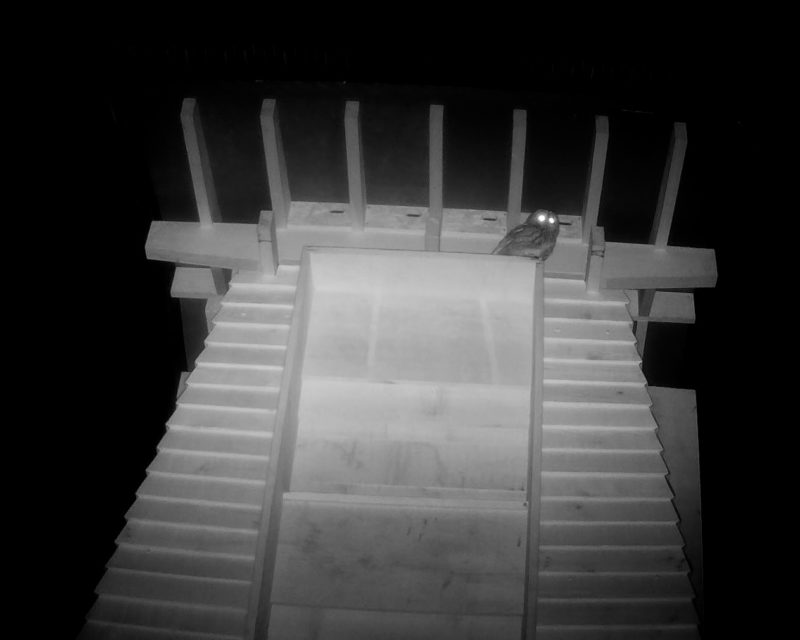
Hrōst is installed on the Hardy Way in Netherbury, Dorset, where monitoring is ongoing. To date it's being used and explored in various by species including tawny owls, bats, woodpeckers jackdaws, woodpigeons, great and blue tits, spiders and a host of insects.

The design is informed by dialogues with species experts and published standards on ecology and nesting by the British Trust for Ornithology, the Royal Society for the Protection of Birds, the Royal Institute of British Architects, the Barn Owl Trust, the Bat Conservation Trust and the Butterfly Trust and Edward and Mandy Mayer of Swift Conservation.

Year: 2025
Team: Alice Bates, Catherine du Toit, Cesar Jucker, Peter Thomas in collaboration with Tim Lucas and Robert Nillson of Price & Myers and Stuart Beagle, Dan Beardshaw, Millie Dernie, Caleb Driver, Jonathan Green and Andrew Slough of BlokBuild with support from Passive Purple, True Wool and the Zoological Society of London.